
Men’s Mental Health Is Transforming Workplace Burnout
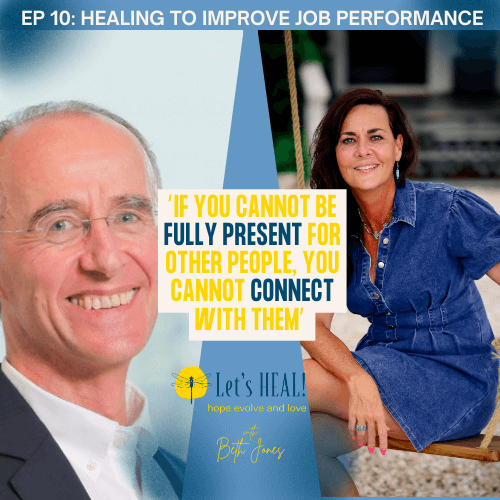
Recently, I had a powerful conversation with Brian Henderson on my Let's Heal podcast that reminded me why men's mental health is so desperately needed in our world today. Brian's story isn't just about a male healing journey from corporate burnout to wellness. It's a blueprint for how men can break free from toxic conditioning and create meaningful communities of support.
As someone who's walked my own healing journey from trauma and unhealthy survivorship, I've seen how isolation compounds our suffering. But Brian's experience illuminated something I hadn't fully appreciated: how deeply men are conditioned to suffer in silence, and what it takes to break that pattern.
The Hidden Crisis of Men's Mental Health in Professional Settings
Brian's story began in a place many high-achieving professionals recognize: the intersection of chronic stress and impossible expectations. As a senior executive at a major law firm in Hong Kong, he was managing a global restructuring while navigating personal challenges that seemed to compound daily.
What struck me most about Brian's experience was how long he pushed through before seeking help. Between workplace pressures, his wife's serious health issues, financial stress from an expensive property purchase, and the uncertainty of COVID-19, his body was displaying classic professional burnout symptoms in ways he couldn't ignore.
“The definition of burnout is a prolonged period of stress that exceeds your ability to cope,” Brian explained during our conversation. His symptoms were textbook: chronic insomnia, digestive issues, inability to concentrate, and emotional volatility. Yet like so many men, he tried to power through until his family doctor asked a crucial question: “Do you feel you'd benefit from seeing a psychiatrist?”
The relief he felt at that moment speaks to how desperately men need permission to seek help for their emotional wellness for men.
Understanding Male Emotional Conditioning
What fascinated me about Brian's healing journey was how his recovery work revealed the deep male emotional conditioning that had contributed to his workplace burnout. During his recovery, he began connecting his workplace struggles to childhood messages like “little children should be seen, but not heard”. Programming that had made him mumble through presentations and struggle to find his voice in meetings.
This revelation hit close to home for me. Throughout my own corporate career, I witnessed countless performance reviews where people were told they lacked “executive presence.” Now I understand that what we call executive presence is often about mindful leadership and authentic connection. Skills that trauma and conditioning can severely impact.
As Brian discovered through his meditation practice, true mindful leadership requires presence.
“If you cannot be fully present for other people, you cannot connect with them. If you can't connect with them, how can you lead them?”
The corporate world systematically beats presence out of people through stress, impossible expectations, and cultures that reward performance over humanity. We end up with leaders who are triggered, reactive, and disconnected from their own emotional experience. That dysfunction cascades down through entire organizations, making corporate stress management a critical need.
The Two-Phase Healing Journey That Actually Works
Brian's recovery followed what I've come to recognize as a powerful two-phase approach to healing from workplace burnout and trauma. The first phase focused on nervous system regulation. Using medication, therapy, yoga, and meditation to stabilize his cortisol levels and restore basic functioning.
This phase can take 12-18 months, and it's crucial not to rush it. As Brian learned, when you're in chronic stress mode, no amount of yoga or meditation can fully counteract the physiological effects of burnout. Your body needs time to literally reset its stress response systems. A crucial aspect of any comprehensive male healing journey.
The second phase involved deeper emotional and spiritual work through insight meditation and dialogue practices. This is where Brian began examining his conditioning, connecting current triggers to childhood experiences, and developing true self-compassion. Essential components of men's mental health recovery.
What I appreciate about Brian's approach is how he combined ancient wisdom practices with peer support groups. He didn't try to heal in isolation. Instead, he created mental health peer support groups during COVID, recognizing that healing happens in community.
Creating Revolutionary Spaces for Men's Community Healing
Perhaps the most inspiring part of Brian's healing journey is how he's now creating spaces for other men to heal. His Movemen community addresses something I've long observed: men are emotional beings who've been systematically cut off from their emotional experience through toxic male emotional conditioning.
“Women's conditioning says it's okay for women to talk about their feelings and emotions with your girlfriends,” Brian explained. “Whereas guys don't. We talk about sport or cars or money or women in a very toxic way. But we don't talk about how we're actually doing.”
His approach to men's community healing is brilliant in its simplicity. Rather than focusing on “toxic masculinity” or mental health labels, he simply creates space where “men support each other through life's ups and downs.” By starting with movement and meditation, then moving into dialogue practices, men can access emotions they didn't even know they were carrying—a powerful form of masculine vulnerability.
The feedback Brian shared with me was particularly moving: “Brian makes you feel like it might all just be okay.” That's the power of authentic community. It reminds us that we're not alone in our struggles, and that healing is possible.
Four Key Takeaways for Your Own Healing Journey
Whether you're a man struggling with workplace burnout or anyone seeking deeper healing, Brian's story offers several crucial insights for men's mental health and recovery:
1. Listen to Your Body's Warning Signs Professional burnout symptoms like insomnia, digestive issues, and chronic tension aren't just stress. They're your body demanding attention. Don't wait until you're completely overwhelmed to seek support for your emotional wellness.
2. Healing Happens in Phases First stabilize your nervous system, then do the deeper emotional work. Trying to rush into trauma processing when you're in fight-or-flight mode rarely works effectively in any male healing journey.
3. Community Is Not Optional Isolation amplifies suffering. Whether it's therapy, peer support groups, or healing communities, we need witnesses to our experience and mirrors for our growth. Men's community healing provides essential connection that individual therapy alone cannot offer.
4. Your Conditioning Isn't Your Fault, But Healing Is Your Responsibility As Brian wisely noted, “What happened is not my fault… but figuring out how I respond to it and how I contribute, that's where my responsibility is.” This balance of self-compassion and accountability is essential for genuine transformation in men's mental health recovery.
The Ripple Effect of Men's Mental Health Healing
What excites me most about Brian's work is its potential for broader social impact. When men heal their emotional wounds and learn to be present with their own experience, they become better partners, fathers, colleagues, and community members. The ripple effects of addressing men's mental health extend far beyond individual healing.
As someone who works with trauma survivors of all genders, I know that hurt people hurt people—but I also know that healed people heal people. Every man who chooses masculine vulnerability over stoicism, connection over isolation, and healing over suffering creates space for others to do the same.
Brian's healing journey from corporate burnout to community builder isn't just inspiring—it's revolutionary. In a world where male violence, polarization, and emotional disconnection cause immense suffering, men's mental health work becomes a form of service to humanity.
Finding Your Own Path Forward
If you're a man reading this and recognizing yourself in Brian's story, please know that seeking help isn't weakness. It's courage. Your emotional experience matters, your healing matters, and the world needs the gifts that can only emerge when you're no longer suffering in silence.
For everyone else, consider how you might support the men in your life in accessing their emotional experience and supporting their men's mental health journey. Sometimes all it takes is asking, “How are you really doing?” and creating space for an honest answer.
Healing isn't a luxury. It's a necessity. And as Brian's story demonstrates, when we do the work to heal ourselves, we inevitably find ourselves called to help others do the same. That's how movements begin, one healed heart at a time.
Ready to begin your own healing journey? Visit our resources page for support, and guidance. Subscribe to the Let's Heal podcast for more inspiring conversations about transformation and recovery. Remember: you don't have to heal alone, and it's never too late to start.
Categories
OUR BLOGS
Recent Posts
Emotional Triggers at Work: What Leadership Reactions Are Really Costing Your Team
A framework for understanding why some leaders’ reactions feel disproportionate to the moment, and what…

Human-First Leadership in Practice: How Recovery Transformed One Leader’s Team
What does leadership look like when a leader has done their own work? Not the…

How Leadership Behavior Sets the Tone for Your Entire Organization
Every organization has a tone. It is not the values statement on the website or…