
How to Heal Emotional Pain: Implementation Over Insight
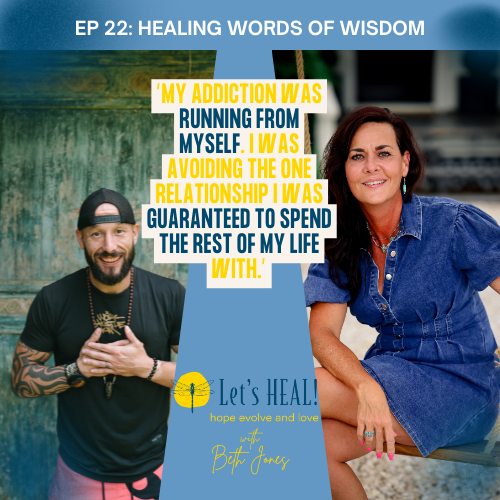
George Bryant introduces himself with refreshing honesty: “Unapologetic lover of Jesus. A-minus dad today, B+ partner, C+ entrepreneur with room for improvement.” This grading system isn’t false humility. It reflects a trauma survivor’s hard-won understanding that emotional healing isn’t about perfection, but about the active and honest pursuit of growth.
George’s healing journey spans eight years of intensive work across multiple healing modalities, including cognitive behavioral therapy, EMDR, MDMA-assisted therapy, breathwork healing, and what he calls “the dangerous route” of plant medicine.
Along the way, he has navigated healing after divorce, committed deeply to inner child healing, and supported heart-centered entrepreneurs in scaling businesses without abandoning who they truly are.
Yet George’s most profound wisdom isn’t about which healing modalities work best. It’s about how to heal emotional pain in real life, how to feel emotions instead of running from them, and the critical difference between understanding healing and actually implementing it.
The Foundation: What Is Emotional Healing?

“I thought healing was a finish line,” George shares. “Truthfully, healing is an active pursuit of growth.”
This reframe is essential for anyone asking what is emotional healing. It’s not arriving at a destination where you’re “fixed.” It’s not reaching a point where you never feel pain again.
Emotional healing is the ongoing practice of feeling, processing, and releasing emotions rather than suppressing or running from them.
“For a majority of my life, I looked at healing as something I had to do and it was bad and it was wrong and it was hard, when in actuality it is the greatest gift that you can give yourself and give the rest of the world,” George explains.
What is emotional healing? It’s giving yourself permission to rewrite your story instead of staying comfortable in your trauma narrative. It’s recognizing that healing emotional wounds isn’t about the severity of what happened to you. It’s about what those experiences did to your heart.
“The real measure of trauma and abuse is what it does to your heart,” I told George. “If it binds your heart up and you’re carrying fear-based emotions, that’s where you live from. That’s the measure for you. It has nothing to do with the events itself.”
“Thousand percent,” George agreed.
The Trauma That Shapes Us: Healing Complex Trauma
George’s story includes layers of healing complex trauma. Raised in chaos by a Marine Corps father, he witnessed domestic violence and his mother nearly dying during childbirth. He served 13 years in the Marine Corps, including deployment to Afghanistan with traumatic brain injuries.
“I almost lost my legs. They put me on a PCA pump for 12 months,” George shares. Hydrocodone prescriptions escalated from one pill to 91 a day.
But George’s most celebrated addiction wasn’t pills. It was hustle culture.
“I chose the addiction that society celebrates, hustle culture of entrepreneurship,” George explains. He became a New York Times bestselling cookbook author with millions of followers. But he wasn’t sleeping, was massively depressed, had anger outbursts. He hadn’t dealt with any trauma.
This is what healing complex trauma requires acknowledging: success and productivity can be escape mechanisms just as much as drugs.
How to Feel Emotions: The 90-Second Rule
One of George’s most practical teachings addresses how to feel emotions without becoming overwhelmed by them.
“An emotion doesn’t last longer than 90 seconds biologically,” George explains. “When you look at the research, if you feel an emotion and you allow it to be present and you express it, it typically goes away within 90 seconds.”
This is revolutionary for trauma survivors who’ve spent years avoiding feelings.
Learning to feel emotions means understanding that the feelings themselves are temporary. What extends it is our resistance, our rumination, our attachment to the story around the emotion.
“But when we attach to an emotion, when we feed it, when we allow the other chemicals to activate in our body, adrenaline, cortisol, that’s what causes the pain and the suffering to continue,” George says.
How to feel emotions effectively: 1. Notice the emotion arising in your body. 2. Allow it to be present without judgment. 3. Express it (breathwork healing, journaling, speaking it aloud). 4. Release it within 90 seconds. 5. Don’t attach a story that extends it.
“Experience your emotion for 90 seconds and be done with it,” I summarized. “Be grateful for it. Know it is what it is, but don’t hold on to it.”
This is how to heal emotional pain: feel it, don’t feed it. Express it, don’t extend it.
Expressing Emotions: Breaking the Isolation Pattern

For trauma survivors, expressing emotions feels dangerous. So we isolate.
“The one thing I’ve always craved, and I think everybody who’s ever experienced pain or trauma craves, is connection,” George shares. “So our default coping mechanism is isolation.”
George realized he was addicted to retelling his trauma story. At a men’s retreat in Mount Shasta, facilitator John Wineland called him out: “George is no longer allowed to tell you anything that happened prior to today.”
“I realized that I didn’t know how to tell another story except the one that I was addicted to telling,” George admits.
Expressing emotions requires breaking the trauma bond healing pattern.
How to stop trauma bonding with your own story: share present experiences instead of past pain, focus on who you’re becoming, and express current emotions without anchoring to old narratives.
The Modalities: From EMDR to MDMA-Assisted Therapy
George’s healing journey included extensive exploration of various healing modalities:
Cognitive Behavioral Therapy (CBT): “I started with cognitive behavioral therapy, ended up in traditional psychology, psychiatry, hospitalizations.”
EMDR: “Then that transitioned to EMDR” (Eye Movement Desensitization and Reprocessing).
MDMA-Assisted Therapy: “Then I did MDMA-assisted psychotherapy.”
Breathwork Healing: George became a breathwork teacher himself, recognizing the power of somatic practices in healing emotional wounds.
Plant Medicine: “Then I ended up down the very dangerous route of plant medicine.”
What George learned through all these healing modalities: “Every modality I’d ever done and studied all had one thing in common. The whole point of them was to get to a place where I could share my experience in witness of another person and be able to talk about it without it overwhelming and overrunning my emotions.”
The second commonality: “What is a new habit, behavior, or awareness that I should practice every single day to let go of this?”
This insight led George to his breakthrough approach: skip straight to implementing the new behavior. Tell someone what you’re doing and why. Don’t wait for months of therapy to tell you what to do differently. Start doing it differently now.
“What if I just skip the first part and I pick a behavior and then I tell somebody this is what I’m doing and why I’m doing it?” George wondered. “That’s when my life started to change.”
Understanding vs. Implementing: The Critical Difference
“Healing is not understanding,” George declares. “Healing is implementing.”
This is perhaps his most important teaching. As a trauma survivor, you can spend years in therapy understanding why you do what you do. You can read every book, attend every workshop, talk through every childhood memory. But healing emotional wounds doesn’t happen through understanding alone.
“I realized that my addiction was running from myself,” George shares. “I was spending every moment avoiding the one relationship I was guaranteed to spend the rest of my life with. Eventually I ran out of hiding places.”
How to heal emotional pain requires action. It requires doing things differently, even when it feels uncomfortable, even when you don’t feel ready, even when you’re scared.
“I ran out of places and I started implementing and then that’s when things really started to turn and shift,” George explains.
This is how to stop self-sabotage: stop waiting until you feel ready. Start implementing new behaviors now. The feeling follows the action, not the other way around.
Inner Child Healing: The Relationship You Can’t Escape
Throughout George’s healing journey, inner child healing emerged as essential work. The Marine who pushed through pain, who hid in hustle culture, who took 91 pills a day, was trying to escape a wounded child who never learned he was safe, loved, or enough.
“I was spending every moment avoiding the one relationship I was guaranteed to spend the rest of my life with,” George says.
Inner child healing means turning toward that wounded part of yourself instead of running. It means recognizing that your adult coping mechanisms, success, achievement, busyness, addiction, are all attempts to soothe a child who needed different care than he received.
“I realized that the reason I was consistently creating chaos is because I was raised in chaos and it was the only place I was comfortable,” George shares. “I’d never been willing to be honest with myself that I was afraid of peace and calm.”
This is the work of inner child healing: becoming comfortable with peace. Learning that calm doesn’t equal danger. Understanding that you can be safe even when nothing is actively going wrong.
Letting Go of Trauma: The Garden Metaphor
George offers a beautiful metaphor for letting go of trauma:
“When I look at the field of life, we all have a garden. We plant seeds, harvest fruit. But weeds also grow.”
Many trauma survivors believe healing means removing weeds once permanently. “No,” George laughs. “Weeds are coming in.”
Letting go of trauma isn’t a one-time thing. New small traumas enter daily. The world constantly throws weeds into your garden.
“We get so fixated on the weeds that we forget to start planting the seeds, and then we’re hungry,” George explains.
The healing journey requires three simultaneous practices: planting seeds (purpose, growth), pulling weeds (processing new hurts), and harvesting fruit (celebrating progress).
How to Forgive: Releasing to Move Forward
Learning how to forgive is essential for healing emotional wounds.
George discovered this through Biblical study.
“I read the DSM cover to cover. I dove into Carl Jung. But then I just read my Bible because it’s all in there,” George shares.
The pattern George found: become aware, accept, release, forgive, renew.
“It’s this constant muscle of become aware, accept, release, forgive, and renew it again because it’s going to happen again,” George explains.
How to forgive starts with recognizing that forgiveness isn’t saying what happened was okay. It’s releasing the hold that experience has on your present life. Forgiving yourself follows the same process.
Healing Relationships: The Little t’s
While George’s story involves “big T” trauma, war, near-death experiences, addiction, he emphasizes that healing relationships often requires addressing “little t” traumas.
“I have 30 text messages I haven’t responded to,” George shares. “Doesn’t really matter why, does it? Go respond.”
These small avoidances cause more lasting pain than we acknowledge. “We obsess about the big ones. I would submit it’s the little ones that cause more pain,” George says.
Healing relationships means addressing daily micro-traumas: the text you avoid answering, the boundary you let slide, the small resentment you don’t voice.
Healing After Divorce: Building Muscle Memory
George is currently navigating healing after divorce, which adds another layer to his ongoing healing journey. But he’s approaching it with the same implementation mindset.
“I’m looking at homes and all of a sudden visions started unlocking and stability and peace,” George shares.
Healing after divorce for George isn’t starting over from scratch. It’s applying the muscle memory he’s built through years of healing work.
“What I find now is that what I’ve built is muscle memory on how to respond in a healthy way to those daily traumas,” I told him, reflecting on my own journey.
This is the gift of doing deep healing work: when new challenges arise, like divorce, job loss, health crises, you have tools.
You know how to feel emotions without drowning in them. You know how to identify emotions as they arise. You know how to express them and release them. You have healing relationships to support you.
Consistency Over Intensity: The Daily Practice
“People overvalue intensity and they undervalue consistency,” George teaches his clients.
This applies to everything: business, relationships, and especially emotional healing. We want the breakthrough moment, the cathartic release, the transformative experience. And those have value. George experienced them through MDMA-assisted therapy, breathwork healing, and spiritual retreats.
But healing emotional pain happens through daily, small, consistent actions.
“Sometimes watering on a healing journey is: did I shower today? Amazing. Did I brush my teeth today? Amazing. Can I go for a five-minute walk? Amazing,” George says.
“We tend to overcomplicate and oversensationalize the journey,” he continues. “But what we’re really doing is we just keep moving the starting line.”
How to heal emotional pain through consistency: – Daily stillness practice (sitting with feelings as they arise) – One intentional healthy choice per day – Responding to one avoided message – Five minutes of movement – One moment of expressing emotions instead of suppressing
“The moment that you just take one intentional bite, one intentional bite, and you celebrate that bite, that’s what healing is,” George says.
How to Identify Emotions: The Body Knows
Learning how to identify emotions is fundamental to emotional healing.
George teaches this through awareness practices.
“The first thing I do when I wake up in the morning, I lay there still or I go outside and I just sit. If I’m sad, if I’m happy, if I’m depressed, if I’m whatever,” George shares.
How to identify emotions: – Notice physical sensations (tight chest, clenched jaw, heavy limbs) – Name the feeling without judgment (anger, fear, sadness, joy) – Allow it to exist without needing to change it – Express it (speaking, writing, breathwork, movement) – Release it within 90 seconds
“It’s human being, not human doing,” George reminds us. “Being means existing. It means feeling. It means expressing.”
The Awareness Breakthrough
“The biggest breakthrough in healing doesn’t come in the learning or mastery or the application,” George teaches. “It comes when we become aware of what’s there. Because once you see, you can’t unsee.”
This awareness is both gift and burden. Once you recognize your patterns, you can’t pretend they’re not there. Once you understand how you’re running from yourself, you can’t comfortably hide anymore.
“I realized that I was more comfortable in the story of my trauma and rewriting the same story like Groundhog Day than I was picking up a pen and writing a new story,” George admits.
Learning what is emotional healing means accepting that awareness brings responsibility.
You can no longer claim ignorance. You must choose: keep living the same painful patterns, or start implementing new ones.
Your Last 90 Days Determine Today
“The life that we have right now, we’re in the results of our previous 90 days of actions,” George says.
This is both sobering and empowering.
If you want to know why you are where you are today in your healing journey, look at your last 90 days. What daily choices did you make? Which emotions did you feel and release? Which ones did you suppress? What new behaviors did you implement? Which old patterns did you repeat?
“It’s just an input game,” George explains. “It’s not an intensity game.”
For trauma survivors asking how to heal emotional pain, this is your answer: consistent daily inputs over 90 days will transform your life more than any single breakthrough moment.
What Is Emotional Healing? Implementation
George’s journey through healing complex trauma, healing after divorce, inner child healing, multiple healing modalities, and ongoing daily practice teaches one central lesson: what is emotional healing? Its implementation.
Not understanding why you hurt. Not analyzing your childhood. Not explaining your patterns to therapists. Those have value, but they’re not healing.
Healing emotional wounds happens when you implement new behaviors even when you’re scared. When you feel emotions instead of running. When you express them instead of suppressing them. When you let go of trauma instead of trauma bonding with your story. When you forgive instead of holding resentment. When you stop self-sabotage by taking action before you feel ready.
“The biggest mistake I made is never realizing that the level of my healing never had to match the level of my trauma,” George shares. “But I was more comfortable in the story of my trauma than I was picking up a pen and writing a new story.”
Begin Implementing Today
George’s final wisdom: “If you listened this far, whatever you heard is an invitation to go act on it, not to allow it to become shelf help. Today’s the day. Just one thing and do it consistently.”
For anyone on a healing journey, asking what is emotional healing, seeking to understand how to heal emotional pain, wondering how to feel emotions without drowning in them:
Stop waiting for perfect understanding. Stop analyzing until you feel ready. Start implementing. Pick one behavior that your healed self would do. Tell someone you’re doing it and why. Then do it. Tomorrow, do it again. Do it for 90 days.
That’s how to heal emotional pain. That’s what is emotional healing. That’s how healing emotional wounds actually works.
Your garden is waiting. Stop fixating on the weeds. Plant a seed today.
Ready to start implementing your emotional healing? Follow George Bryant and his podcast Mind of George for weekly teachings on mindset, relationships, and business aligned with healing. Find him on Instagram @itsgeorgebryant. For more resources on healing complex trauma, learning how to feel emotions, and discovering various healing modalities for your healing journey, visit our Resources where we walk this path together, implementing one day at a time.
Categories
OUR BLOGS
Recent Posts
Emotional Triggers at Work: What Leadership Reactions Are Really Costing Your Team
A framework for understanding why some leaders’ reactions feel disproportionate to the moment, and what…
Human-First Leadership in Practice: How Recovery Transformed One Leader’s Team
What does leadership look like when a leader has done their own work? Not the…

How Leadership Behavior Sets the Tone for Your Entire Organization
Every organization has a tone. It is not the values statement on the website or…