
Human-First Leadership in Practice: How Recovery Transformed One Leader’s Team
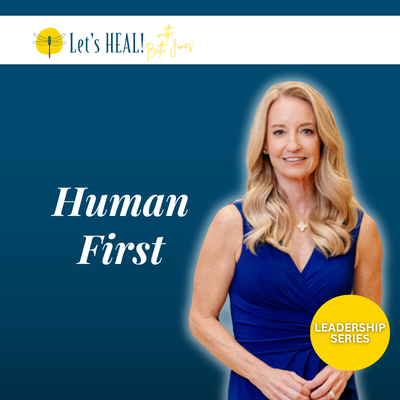
What does leadership look like when a leader has done their own work? Not the theoretical version. Not the version that shows up in leadership development programs. The version that changes how people experience being in the room with you.
Laura Roach is a partner at McCathern and one of the most recognized family law mediators in Texas. She has mediated thousands of cases over a 25-year career and is known for settling the ones other people have given up on. But the leadership style she practices today is not the one she started with. It was forged in a breakdown that nearly cost her everything.
Summary
In this episode, Laura shares how hitting her lowest point transformed not just her personal life but her leadership. Her team is not afraid to bring her problems. She tells her young attorneys to go home to their families. She models vulnerability by being open about her own recovery. And the result is measurable: stronger talent, higher retention, and more revenue. This is what tone at the top looks like when a leader has done their own healing work.
The Survival Pattern: Ego as Armor
Before her breakdown, Laura led from ego. She fought to appear strong. She managed by directive. Her leadership was effective in the way survival-mode leadership often is: it produced results while building walls between her and the people around her.
“I fought so hard to appear strong all the time. And even at work, it was like, well, you just do it my way. Well, I’m a much better lawyer and mediator when I listen.”
– Laura Roach
Laura’s turning point came when the facade became unsustainable. Addiction, unprocessed childhood trauma, and the pressure of maintaining appearances collided. With support from her husband and a willingness to do the work, Laura entered recovery and began dismantling the survival patterns that had been running her leadership.
What Changed: Human-First Leadership in Practice
Vulnerability as a Leadership Tool
Laura’s team knows she is in a 12-step program. When an employee struggles, she is the first person they tell. When a young attorney makes a mistake, they come to her immediately because they know the response will be collaborative, not punitive. This is not softness. This is a leader who has modeled that it is safe to be human.
“Go Home to Your Babies”
One of Laura’s attorneys has two young children at home. Rather than expecting long hours as a sign of dedication, Laura told him to start working from home on Fridays. Her message: your main job is at home. The result is not reduced productivity. It is loyalty, trust, and a team that performs because they want to, not because they are being watched.
The Business Case for Doing the Work
Laura makes the case plainly: recovery made her more money. Her professional friends in recovery all experienced the same trajectory. When leaders focus on what is important in life, they attract people, which attracts business, which generates revenue. Better talent chooses to work for leaders who see the human being first. The cycle repeats.
“You make a lot more money if you’re in recovery… you attract better talent to work with you. And then the cycle repeats.”
– Laura Roach
Human-first leadership is a leadership approach in which the leader sees employees as whole human beings, not functions. It prioritizes psychological safety, vulnerability, and life-work integration. Leaders who practice it create environments where people feel safe making mistakes, raising problems, and prioritizing their families without penalty.
When a leader does their own healing work, their survival patterns—ego, emotional distance, control—begin to shift. The team experiences a leader who is more present, more approachable, and safer to be honest with. This changes retention, trust, and performance.
Yes. Laura Roach describes how being open about her own recovery transformed her leadership. Her team brings her problems immediately because they know the response will be collaborative. Vulnerability builds trust, which builds loyalty, which builds performance.
If any of this resonates, email me directly at beth@empoweredsurvivors.com.
Bring Beth into your organization as a speaker or workshop facilitator
Read What I Learned About Leadership from Every Compliance Failure I Investigated
Beth Jones
Leadership Performance Strategist | The HEALing Mentor | Founder, Empowered Survivors
Categories
OUR BLOGS
Recent Posts

What Imposter Syndrome Looks Like Inside a Leadership Meeting
Most of the imposter syndrome conversation stops at the feeling. Not good enough. Don’t belong….
Conflict Avoidance Is a Leadership Behavior With a Measurable Cost
Conflict avoidance goes by a lot of names: patience, diplomacy, being easy to work with….

Stop Performing for Approval and Start Leading
Some of the most capable leaders in an organization are also the most exhausted, and…