

I spent thirty years reading behavior under pressure, first as a forensic investigator tracing evidence back to a root cause, later as a leader turning that same lens on myself. What I learned applies directly to how organizations try to develop the leaders who cost them the most: the ones who can’t delegate, the ones…

A woman sits across from her boss in his first week of trusting her with the truth. He says, “I need someone to be honest with me.” And in her head, before she can stop it, a different sentence forms: there is no way in hell I am going to be honest with this man.…
Most leadership behavior problems are diagnosed where they appear: in the room. In the meeting. In the 360 feedback. In the team dynamics that don’t work. What rarely gets examined is where those behaviors came from — and why the work environment so reliably makes them worse. This post explores two leadership patterns I observed…

Some of the most effective leaders I know share a skill that no business school taught them: the ability to walk into a room and feel everything. Every tension, every unspoken frustration, every shift in mood. It reads as emotional intelligence. It gets praised in performance reviews. And it was learned in an environment where…
A framework for understanding why some leaders’ reactions feel disproportionate to the moment, and what it costs everyone around them. Summary Emotional triggers at work show up in leadership as reactions that don’t match the size of the situation in front of them. A missed deadline produces anger that belongs to something much older than…

What does leadership look like when a leader has done their own work? Not the theoretical version. Not the version that shows up in leadership development programs. The version that changes how people experience being in the room with you. Laura Roach is a partner at McCathern and one of the most recognized family law…
Every organization has a tone. It is not the values statement on the website or the leadership principles on the conference room wall. It lives in actual leadership behavior: the decisions made when no one is watching, how mistakes are handled, whether employees are seen as human beings or reduced to functions. I spent nearly…
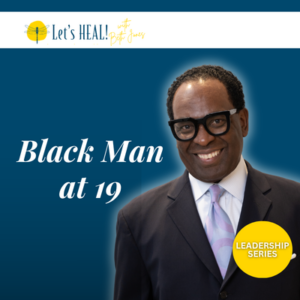
Most conversations about unconscious bias in the workplace stay at the surface: acknowledge it exists, commit to doing better, move on. What those conversations rarely reach is the survival conditioning underlying the bias, the patterns that formed before anyone entered the workforce, and the organizational cost of leaders who cannot see what drives their decisions.…
Most organizations treat unconscious bias as a training gap. The answer to close the gap is a workshop or an awareness session that checks the box, giving leaders general knowledge, but no pathway to the root cause.The root cause is survival conditioning and that’s hard to help anyone identify when, but definition, we’re talking about…

Most leaders who operate from survival patterns in leadership do not know they are doing it. They know something feels off. They may have been told they are too intense, too controlling, or too hard on themselves. But they attribute it to the pressure of the role, not to a wound that predates the job…